
The Calling Crisis: Why WhatsApp’s Native 'Chat-to-Call' API is Paralyzing Multi-Agent B2B Teams Without CRM Routing
Meta’s WhatsApp Business Calling API is changing B2B sales. Learn how to prevent call chaos, route leads smarter, and scale with CRM-powered WhatsApp infrastructure.
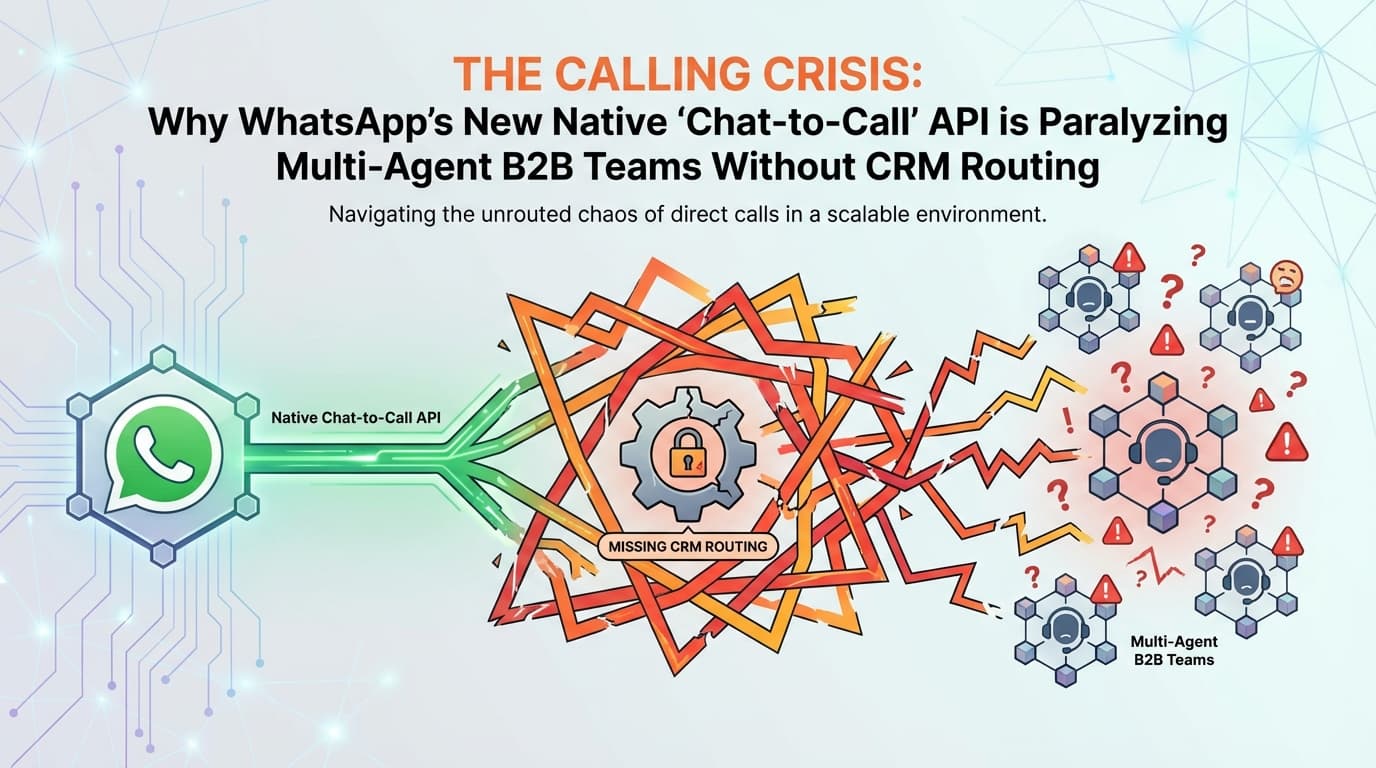
The New Voice of WhatsApp
In July 2025, Meta fundamentally transformed the landscape of B2B communication with the official rollout of the WhatsApp Business Calling API. For the first time, businesses were granted the ability to handle incoming and outgoing voice calls natively within the platform at an enterprise scale.
This new "Chat-to-Call" functionality is an undeniable win for the modern B2B buyer. It offers ultimate convenience, allowing a prospect to start a detailed product inquiry via text and instantly escalate the conversation to a live voice call without ever leaving the app. However, while buyers are embracing this frictionless experience, it has triggered a significant operational challenge for the teams managing these interactions.
The Calling Crisis Explained
While asynchronous text messaging gives sales teams breathing room to multi-task and route inquiries, voice calls are synchronous and demand immediate attention. We call this the "Calling Crisis."
Multi-agent teams still relying on the standard WhatsApp Business app or basic, disconnected API setups are suddenly finding themselves paralyzed. When a high-value lead initiates a native call, these rudimentary systems cannot dynamically route the interaction. Inbound calls get dropped, agents step on each other's toes, and crucial deal context is lost in the rapid transition from text to voice.
To compound the urgency, Meta officially sunsetted conversation-based billing in July 2025, shifting to a per-message pricing model. This means that prolonged, unrouted text conversations prior to a call are no longer just an operational nuisance—they actively drain a company's budget. Fast, contextual routing is now a financial necessity.
The Data: Why You Can’t Ignore This Trend
The shift toward native voice escalation isn't just a fleeting feature update; it represents a permanent change in buyer behavior. Understanding the numbers highlights why upgrading your infrastructure is critical:
- 76% of users now prefer the flexibility to seamlessly switch between chat and voice within a single interaction. They expect zero friction when escalating a query.
- 80% of large enterprises plan to adopt the WhatsApp Business API by the end of 2025, signaling a massive shift away from legacy communication channels.
- Engagement rates remain unparalleled, with WhatsApp consistently boasting ~98% open rates and 45–60% click-through rates (CTRs).
How Lack of Routing Kills Deals (The 3 Bottlenecks)
When B2B buyers expect instant, contextual voice support, a disorganized backend will quickly kill deals. Here are the three primary bottlenecks caused by inadequate WhatsApp infrastructure:
1. The "Trapped on One Phone" Call Chaos
When a high-value B2B lead initiates a native WhatsApp call, basic setups often ring a single physical device or an unorganized shared number. This bottleneck essentially limits an entire sales floor to a single point of entry, leading to unanswered calls, misdirected inquiries, and ultimately, lost revenue.
2. Context Loss During the "Chat-to-Call" Transition
The beauty of "Chat-to-Call" is continuity, but that breaks down if the agent answering the call is flying blind. A sales rep picking up an escalated WhatsApp call rarely has the time to scroll through a 50-message chat history. This forces the buyer to repeat themselves, creating friction and frustration right at the moment they are ready to engage.
3. Disconnected Data & Stale Lead Profiles
Without a proper CRM integration, sales reps are forced to manually bounce between their CRM software and the WhatsApp interface to log call outcomes, update deal stages, or reference account history. This manual data entry leads to stale lead profiles and fragmented team alignment.
Solving the Crisis with Whatatalk
To harness the power of Meta's Business Calling API without succumbing to the Calling Crisis, businesses need a platform that marries the familiarity of WhatsApp with the routing power of an enterprise CRM.
This is where Whatatalk comes in. As an API-powered CRM solution, Whatatalk provides the exact infrastructure needed to turn native voice calls into your strongest sales asset:
- Shared Team Inbox with Chat Assignment: Whatatalk completely removes the "one phone" limitation. All inbound interactions—whether text or voice—flow into a unified dashboard. Using role-based permissions, interactions are dynamically assigned to the right account executive, ensuring calls are never dropped and agents never clash.
- AI Summarization & Internal Team Notes: To bridge the gap between text and voice, Whatatalk’s built-in AI module works quietly in the background. Right before answering an escalated call, the assigned agent receives an instant Conversation Summary—a 3-second brief of the chat history. Post-call, reps can drop Internal Team Notes directly into the thread to keep the entire sales floor aligned.
- User Variables & Full CRM Sync: Operating with the power of a deep CRM, Whatatalk uses User Variables to store crucial custom data attributes, such as company size or deal stage. Coupled with full CRM and ERP sync capabilities, your agents will have the lead's entire personalized profile right on their screen the moment the phone rings.
Conclusion
WhatsApp is undoubtedly a goldmine for B2B engagement, but unlocking its full potential—especially in the era of native voice calls and per-message pricing—requires the right infrastructure at scale. Don't let the Calling Crisis paralyze your sales floor or drain your budget through inefficient routing.
Empower your multi-agent teams with the shared visibility, AI-driven context, and seamless CRM synchronization they need to close deals faster.
Ready to transform your WhatsApp strategy?
Start for free and deploy Whatatalk in hours, not months.
Visit (https://whatatalk.com/) today to build a smarter, more connected sales floor.